
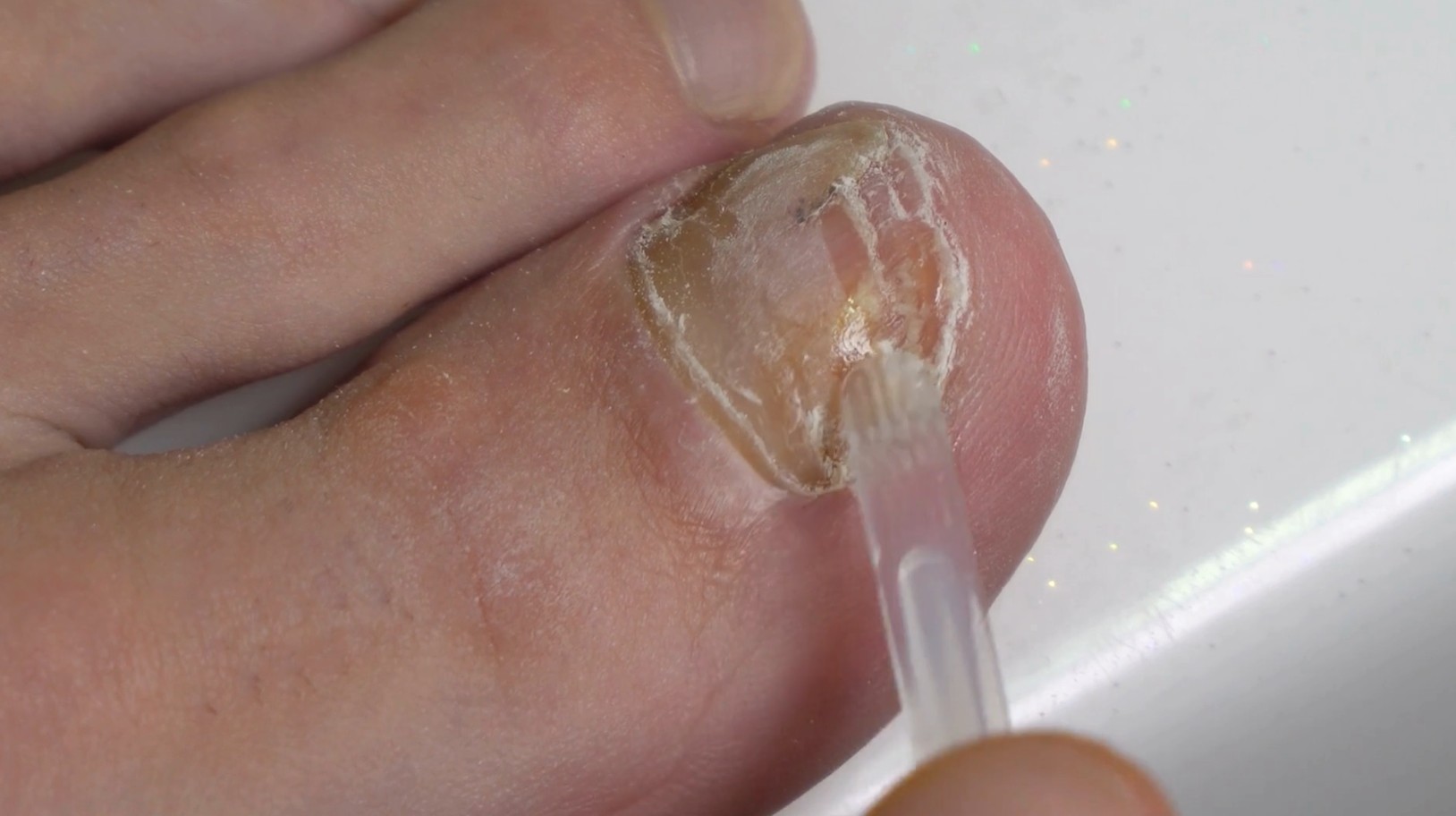
Do you have toenail fungus… and digestive issues? Most people would assume those two things have absolutely nothing to do with each other.
After all, toenail fungus and Candida are different organisms.
But after treating digestive Candida and fungal overgrowth in patients for over 2 decades, I’ve seen something fascinating happen over and over again: their toenail fungus improves.
Not because we treated the toenail. Not because we gave them antifungal creams. But because we addressed what was happening in their gut.
And when something happens too many times to ignore, you start asking bigger questions.
Hi, I’m Dr. Stephen Wangen. I’ve been treating Candida and complex digestive conditions for over 25 years, and I founded the IBS Treatment Center in 2005, where we’ve helped more than 10,000 patients recover.
Today I want to talk about something that sounds strange at first—but has shown up enough times in my practice that I think it deserves serious attention. That’s the connection between intestinal Candida and toenail fungus.
Now, technically speaking, these are usually not the exact same fungi. Candida is a yeast that can overgrow in the digestive system. Toenail fungus is more commonly caused by dermatophytes—fungi that thrive in keratin-rich tissues like nails and skin.
So on paper? They’re different, which means most doctors would probably say they’re unrelated. And if you only think about this from a narrow infectious disease perspective, that conclusion makes sense.
But medicine gets more interesting when you actually pay attention to patterns. Because many of our patients have told us something remarkably consistent: “My toenail fungus improved after we treated my gut.” Not once. Not twice. Many times.
So what could explain that?
One of the biggest mistakes in medicine is pretending the body is made up of disconnected compartments or systems. Your gut over here. Your skin over there. Your toenails somewhere off in their own universe. And you see different doctors for everything.
But that’s not how biology actually works.
Everything is connected.
The microbiome in your gut influences your immune system and your overall health. And fungal overgrowth in one part of the body may reflect a bigger imbalance rather than an isolated local issue.
That doesn’t mean intestinal Candida directly transfers down your leg and infects your toenail—that’s not what I’m saying.
What I am saying is that a body that is struggling with fungal balance internally is more likely to struggle externally too.
Fungal organisms are everywhere—we’re exposed constantly.
Most people don’t develop chronic fungal problems because their immune system and internal environment keep things in check.
But if your gut microbiome is disrupted… if your immune system is chronically stressed… if you have inflammation… if your digestion is impaired… if you’re not absorbing nutrients well… then suddenly your body may become much less effective at controlling fungal growth in general.
That’s where the connection starts to make sense.
The toenail fungus may not be caused by Candida, but both may be signs of the same underlying terrain problem.
This is where medicine often gets stuck.
People focus entirely on killing the organism.
Kill the fungus. Kill the bacteria. Kill the bug.
And sometimes that helps temporarily.
But if the environment that allowed it to thrive hasn’t changed, it often comes right back.
That’s why so many people struggle with recurring Candida symptoms, recurring toenail fungus, or recurring skin fungal infections.
You can keep attacking the organism forever… or you can ask: why is this body vulnerable in the first place?
That’s a much better question.
Many of the patients who’ve reported this connection weren’t just dealing with toenail fungus. They also often have digestive symptoms like:
🔹bloating
🔹gas
🔹constipation
🔹diarrhea
🔹fatigue
🔹brain fog
🔹skin issues
🔹sugar cravings
That’s often a clue that something systemic is going on.
And when we address the digestive piece properly—not just by guessing, but by identifying what’s actually driving the imbalance—that’s when broader improvements can happen.
To be clear: I’m not saying there’s a published clinical trial proving that treating intestinal Candida cures toenail fungus.
What I am saying is that I’ve had too many patients tell me this for me to ignore.
If you’ve been fighting toenail fungus for years… and nothing topical seems to work… and it keeps coming back… you may be looking at only part of the problem.
Because sometimes the toenail isn’t the real story.
Sometimes it’s just the visible clue.
And if that’s true, then treating only the nail may never fully solve it.
If this sounds familiar, we help people uncover what’s actually driving chronic digestive issues and Candida-related symptoms.
And yes—we work with people regardless of where they live, via telemedicine. So we can work with you too.
Or, if you’d like to do this on your own, you can take my online Conquering Candida course by clicking on the link above or below in the description.
And remember to take good care of your body—it’s the only place you have to live.
Sign Up For Conquering Candida, Dr. Wangen's Online Course Here!
https://learn.drwangen.com/join-conquering-candida-LTO
Dark Circles Under Your Eyes, Fatigue, Gas, Acne? Your Body Is Trying to Tell You Something
Candida Die-Off: What’s Real vs What’s Not
Seattle: 206-264-1111
Los Angeles: 310-319-1500
Our WhatsApp: 206-791-2660
Copyright © 2026 IBS TREATMENT CENTER. All Rights Reserved
Managed by: ZevePH
Lorem ipsum dolor sit amet, consectetur adipiscing elit. Suspendisse varius enim in eros elementum tristique. Duis cursus, mi quis viverra ornare, eros dolor interdum nulla, ut commodo diam libero vitae erat. Aenean faucibus nibh et justo cursus id rutrum lorem imperdiet. Nunc ut sem vitae risus tristique posuere.